Plastic Pirates identifies more than 2,400 types of waste in Catalan rivers and highlights a problem that remains stable
[addtoany]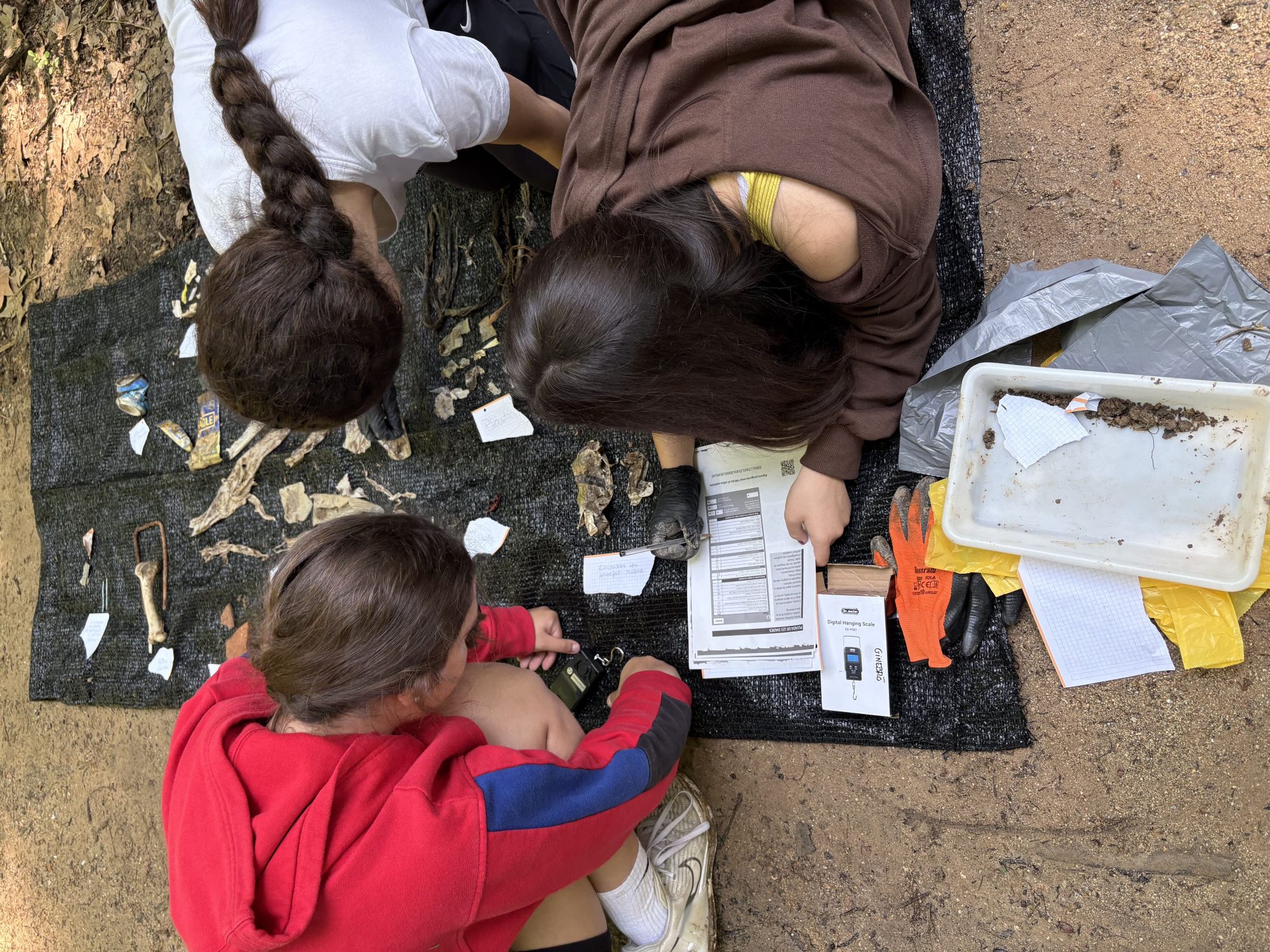
The European citizen science project Plastic Pirates, coordinated in Catalonia by the BETA Technological Centre of the University of Vic – Central University of Catalonia (UVic -UCC), has concluded another edition. This year, 34 schools and 541 young people participated, sampling a total of 57 river sections. In total, 2,437 pieces of litter were identified, roughly equivalent to one piece of litter per square meter sampled.
Plastics remain the most common type of waste found in river ecosystems, representing 71.6% of the total waste collected. Of this percentage, 86.6% is single-use plastic. Within this category, 63% are single-use wipes, 20% are food containers, 6% are bags, and 3% are plastic bottles. The predominant presence of single-use wipes highlights the problems associated with their improper disposal. When flushed down the toilet, these wipes can partially bypass wastewater treatment systems and end up in waterways.
The results are similar to those of previous years and demonstrate the need to continue working on raising public awareness and preventing littering in the natural environment. They also highlight the importance of promoting more sustainable consumption habits and proper waste management, especially of single-use plastics.
New research projects to better understand plastic pollution
Beyond the participation and sampling results, this edition of Plastic Pirates has served to promote new lines of research led by the BETA Technological Centre.
On the one hand, a collaboration has been initiated with ICATMAR (Catalan Institute of Research for Marine Governance) to study the relationship between waste present in rivers and that found in the Mediterranean Sea. The aim is to better understand what types of waste are transported by waterways and to what extent they contribute to marine pollution. Although there is extensive research on ocean pollution, there is still a significant knowledge gap regarding the role of rivers as a pathway for transporting waste to the sea.
In parallel, the research team has also conducted a study on young people’s emotional responses to the problem of plastic pollution. This research seeks to better understand how citizen science activities like Plastic Pirates influence environmental awareness, perception of the problem, and the hope of participants in the face of current environmental challenges. The results will help improve the project and enhance its educational and transformative impact.
A project that continues to grow
Following another successful edition, the project Plastic Pirates will continue next year, involving schools and young people from all over the country in the study of river pollution.
Active student participation not only contributes to generating scientific knowledge about a still understudied problem, but also fosters a more critical, informed, and environmentally engaged citizenry. Understanding what is happening in our rivers is fundamental to moving towards a more sustainable future.
About the methodology and the project
The project Plastic Pirates uses a standardized scientific methodology in which students select a representative stretch of river, collect water samples to detect microplastics, and identify, quantify, and classify the waste present on the riverbank. Using a sampling kit and a common protocol, the waste is categorized according to material, origin, and environmental impact. Finally, the results are analyzed with the students to draw conclusions and propose measures to reduce river pollution.
Plastic Pirates is a European citizen science project promoted in Spain by the BETA Technological Centre of the University of Vic – UCC, the University of Burgos, and the Oxígeno Foundation, with the support of other scientific institutions. The data collected by participants is integrated into a European database. Created in Germany in 2016, the project involves educational centers and organizations from several European countries, becoming one of the largest youth citizen science networks in Europe. It is funded by the European Commission through the Horizon Europe program and has the support of the Spanish Foundation for Science and Technology (FECYT).
The BETA Technological Centre of the UVic -UCC: European benchmark in sustainability
CT BETA was established in 2014 to promote research in environmental technologies and the circular bioeconomy at UVic – UCC. In its nearly ten years of operation, it has become a key player in technological development, improving competitiveness and quality of life in rural communities, with a particular focus on the agri-food sector.
Furthermore, CT BETA has also established itself as a pioneering actor in the integration of environmental, economic and social sustainability in industrial sectors, and has developed the capacity to directly influence different levels of public administration to support the development of new environmental policies based on scientific evidence.