The Eduard Soler Foundation and BETA develop a new data acquisition system for research in environmental technologies
The prototype has been developed from a final project of the Industrial Automation and Mechatronics studies of the Eduard Soler Foundation.
[addtoany]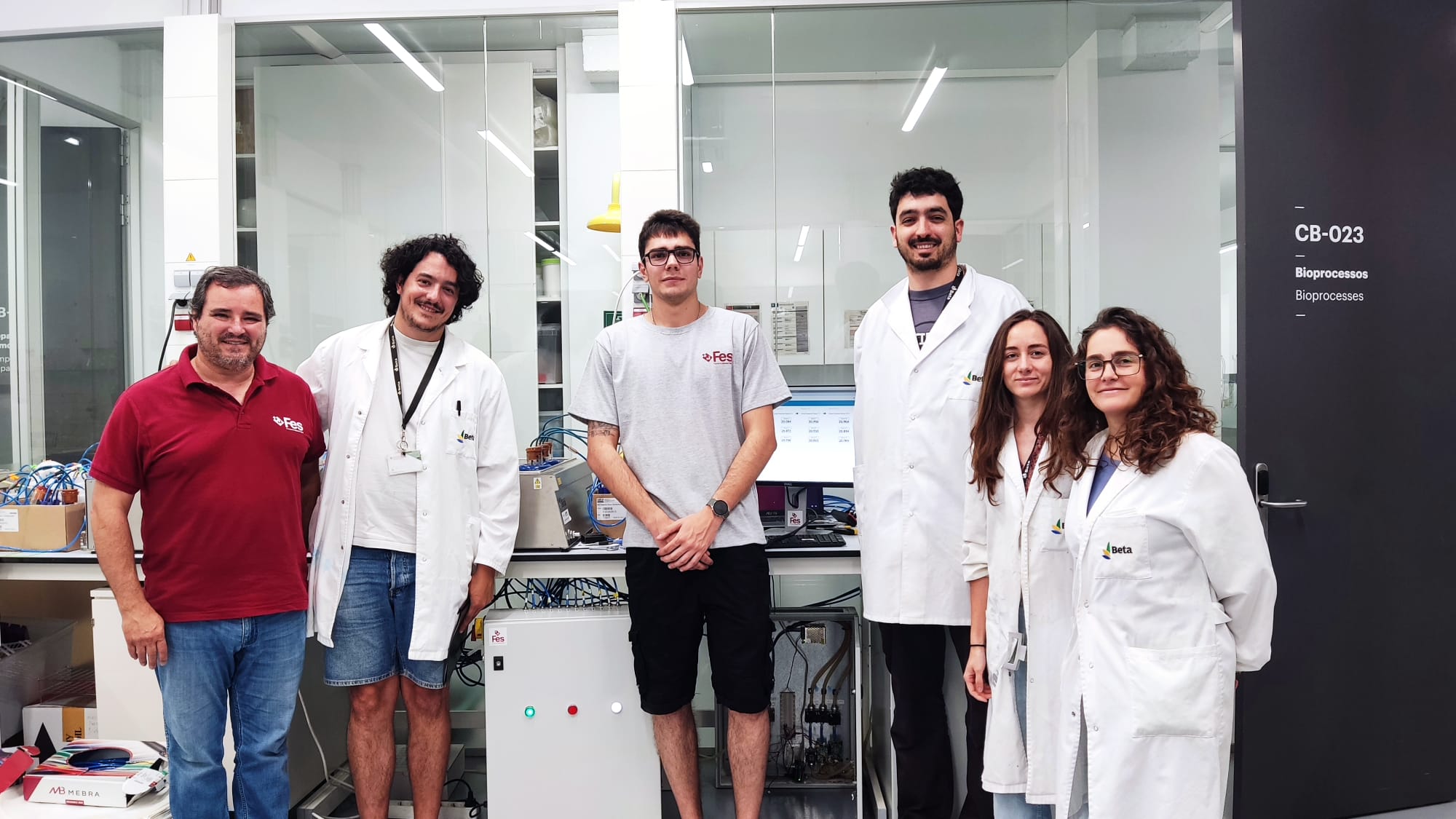
The Eduard Soler Foundation (FES) and the BETA Technology Center of the University of Vic – Central University of Catalonia (UVic-UCC) have collaborated in the development of a new data acquisition prototype aimed at improving the experimental tests carried out in research projects in environmental technologies.
The initiative arose from a need detected by the Environmental Technologies unit of the BETA Center, which sought to have a more robust and reliable data acquisition system for its experimental respirometer. Based on this challenge, the FES incorporated the development of the device as a final project of the Industrial Automation and Mechatronics studies.
During the last year, the student Àlex Montañés has developed a functional prototype that allows the simultaneous recording of oxygen consumption data from twelve different reactors. This system allows respirometry of biological material and solid-state fermentation processes to be carried out on a laboratory scale, providing more robust and reliable data for research projects.
A collaboration between research and applied training
The project has been developed for approximately a year and a half through close collaboration between the teams of the two institutions, with several visits to both the BETA Center and the FES facilities to adapt the development of the prototype to the real needs of the researchers.
The project manager of the Eduard Soler Foundation, Carles Pereira, has been satisfied with the work done by the student, and highlights that “for our students, these types of projects have enormous added value”, especially because “they allow us to work directly with a real client, understand their needs and, in addition, see how their work has a direct application in the world of research”. Finally, he has opened the door to future collaborations with scientific entities such as the CT BETA.
Jordi Llimós, researcher at the Environmental Technologies unit of the BETA Technology Center, explains that “we needed a more robust and reliable system to acquire data from our experimental tests. This project has allowed us to have a tool that responds exactly to the needs of our laboratory”. He also highlights that “beyond the technical result, the collaboration with the Eduard Soler Foundation has been very positive and encourages us to continue promoting new shared projects”.
The Eduard Soler Foundation is a private non-profit foundation dedicated to technological training and support for local companies. Its methodology is committed to integrating training, innovation and knowledge transfer through applied projects that allow students to work on real needs posed by companies and research centers.
This experience demonstrates the potential of collaboration between vocational training and research centers to convert real needs into technological solutions with direct application.