Meritxell Abril: “Flood risk management cannot fall to a single administration or sector, but requires joint and coordinated involvement of all actors related to the territory”
Meritxell Abril is a biologist and PhD in applied ecology, and researches how human impacts and climate change, especially extreme phenomena such as floods and droughts, affect aquatic ecosystems. She also studies the effects of management and restoration actions on these ecosystems. At the BETA Technological Centre of UVic - UCC, she coordinates several projects, including LocAll4Flood, focused on flood risk management in the Mediterranean.
[addtoany]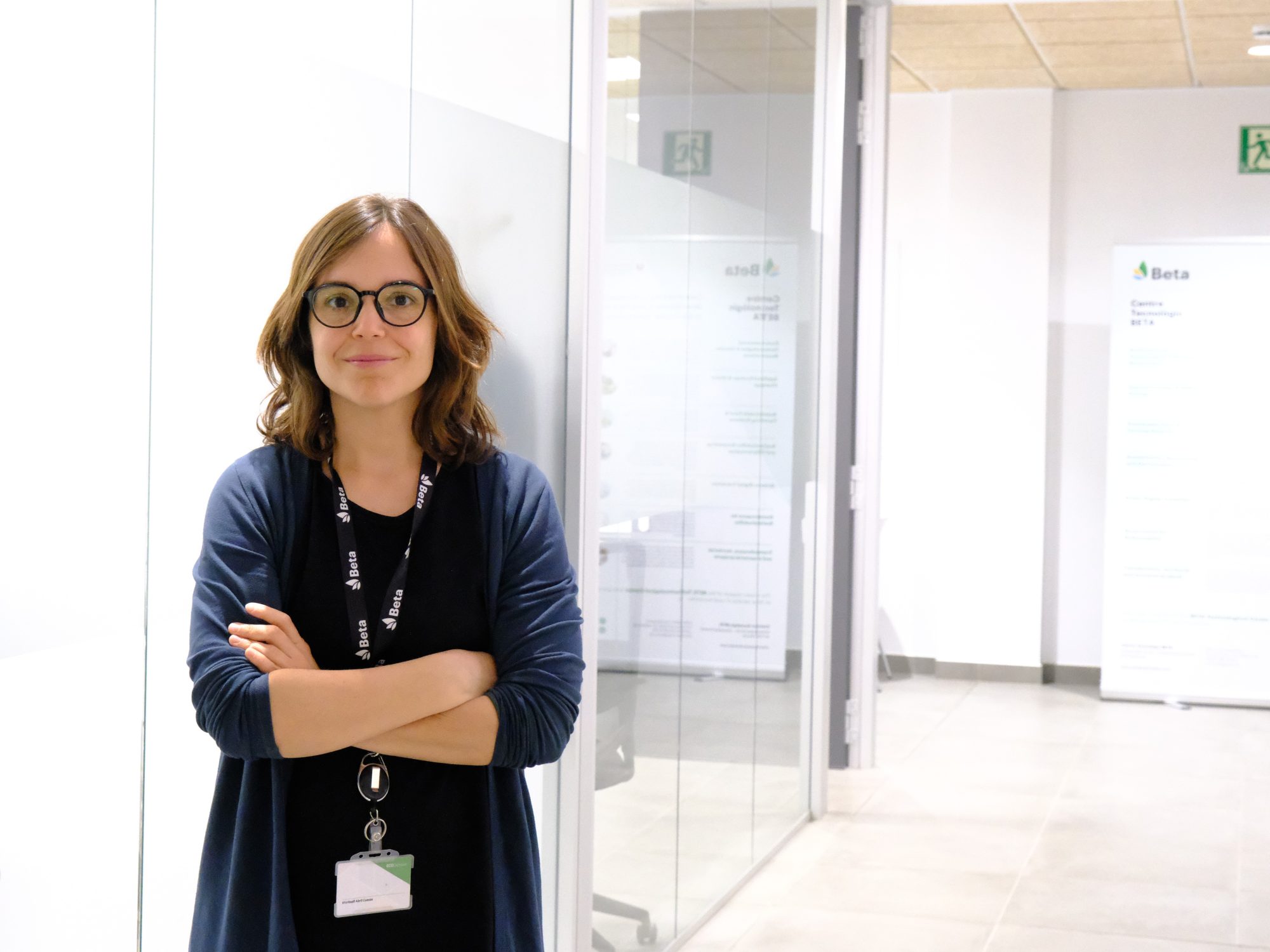
What are flash floods in the Mediterranean?
Flash floods are episodes of flooding that occur very quickly as a result of very intense rainfall in a short time. They are particularly common in the Mediterranean, especially in summer and autumn, because there are many small basins with steep slopes, where the water drains quickly and does not have time to infiltrate the soil. This causes torrents and streams, which are often dry, to overflow unexpectedly. These episodes are now more frequent, more intense and with more serious impacts on people, the territory and infrastructure.
How does climate change affect the frequency or intensity of these floods?
The effects of climate change in the Mediterranean are more intense for several reasons: it is one of the regions that warms up the fastest, with a temperature increase higher than the global average, favoring more frequent droughts. This faster warming is due to its geographical location, in addition to other factors such as deforestation and increased urbanization. The increase in temperature causes a greater evaporation process and more humidity in the atmosphere, generating more intense and irregular precipitation.
What have you achieved with the LocAll4Flood project?
With the LocAll4Flood project, we have managed to move towards a new way of understanding and managing the risk of flash floods in the Mediterranean. The project has developed an integrated governance framework specifically designed for small Mediterranean basins, which are often outside the usual prediction and planning systems. This approach combines prevention, adaptation and risk mitigation, incorporating early warning systems, decision-making support platforms and nature-based solutions. In addition, the project has worked intensively on raising awareness and training citizens and local actors, developing educational materials and organizing co-creation workshops in pilot territories. All this has allowed us to test and validate solutions adapted to very diverse contexts, with the aim of making them useful and replicable in other areas of the Mediterranean.
How important is collaboration in this project and which actors are involved?
Collaboration is one of the fundamental pillars of the LocAll4Flood project. Flood risk management cannot be the responsibility of a single administration or sector, but requires the joint and coordinated involvement of all actors related to the territory. For this reason, the project integrates local, regional and national authorities, civil protection services, environmental departments, research centres and universities, technology companies and representatives of civil society. This collaborative work allows for the co-production of knowledge, improved institutional coordination and taking into account both the technical vision and the local and citizen experience.
How has the continuity of the actions or progress achieved beyond the project been guaranteed?
The European project LocAll4Flood has created spaces for cooperation throughout its two years of duration, and this has represented a significant improvement in the territorial management of flood risk. For this reason, a collaboration agreement has been formalized between relevant actors including the City Council of Vic, the City Council of Gurb, and the Catalan Water Agency (ACA), with the aim of giving continuity to these cooperation spaces. This agreement will result in the establishment of a round table in Vic and Gurb to strengthen flood risk management in these municipalities of the Gurri River Basin through coordinated, inclusive and sustainable approaches.