BETA joins the debate on the future of agri-food innovation in Europe at the European Research and Innovation Days
Sergio Ponsá was one of four invited speakers on the agriculture and food systems panel at the European Commission’s flagship research and innovation event
[addtoany]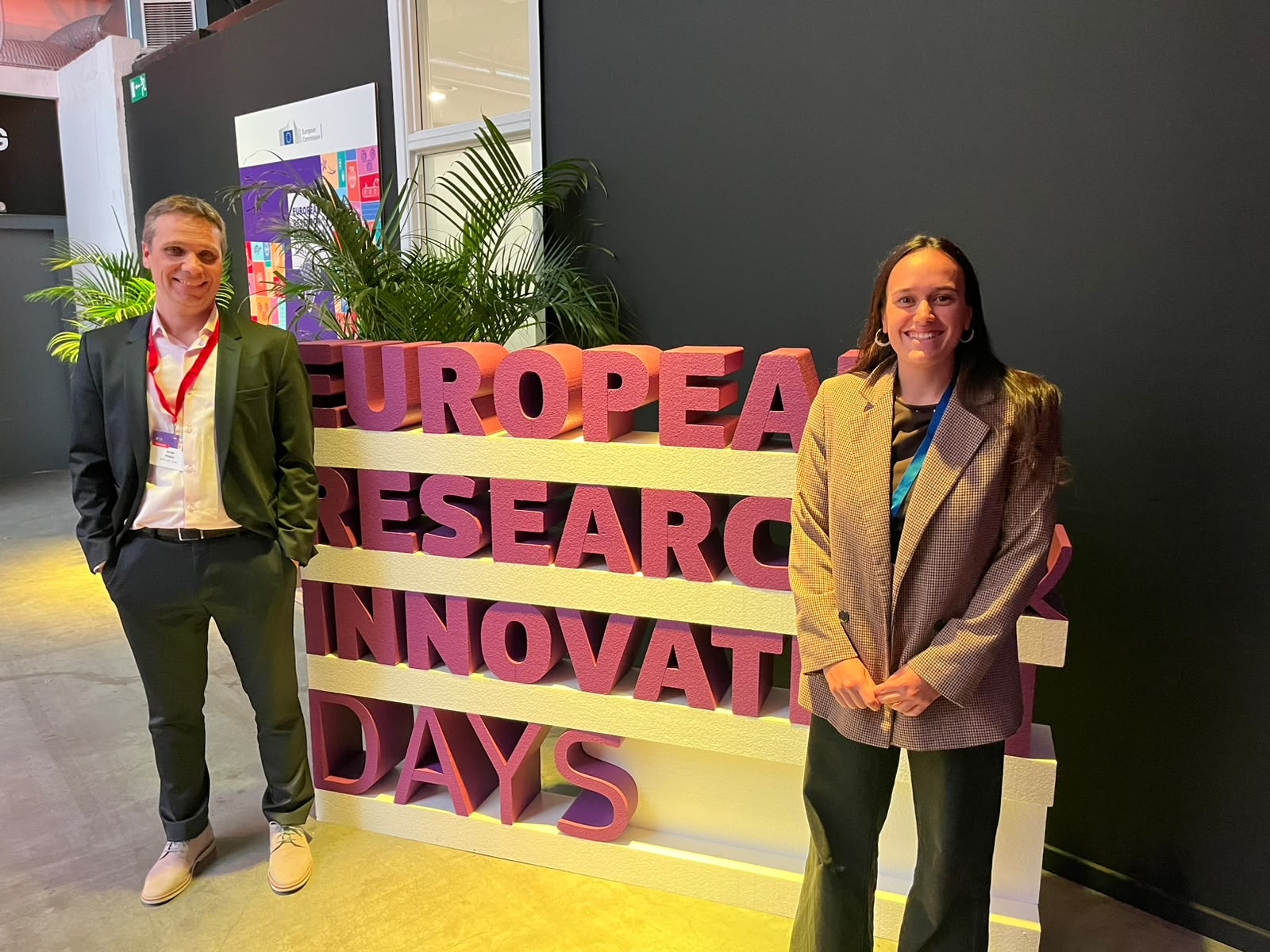
What happens when a European project ends just as an innovation is ready to be put into practice? Sergio Ponsá, Director of the BETA Technological Centre, raised this question during the Spotlight on Agriculture and Food Systems panel, held in Brussels on 11 November. He argued that solutions that have already shown promise should be able to access follow-on support through simpler procedures and with measurable objectives at each stage.
The panel was part of the seventh edition of the European Research and Innovation Days, which brought together policymakers, researchers, businesses and civil society representatives to discuss how research and innovation can strengthen Europe’s competitiveness, resilience and technological sovereignty. Ponsá was joined by Biljana Borzan, Member of the European Parliament, Siobhán Jordan, Head of Technology Transfer and Commercialisation at Teagasc, and Richard Zaltzman, CEO of EIT Food.
The session was framed by AgRI 2040 and Food 2040, the European Commission’s two frameworks for guiding research and innovation in agriculture, forestry, rural areas and food systems. Ponsá called for closer coordination between the proposed Horizon Europe programme and European Competitiveness Fund, the instruments of the Common Agricultural Policy, and national and regional programmes. This could help secure investment to deploy a technology and provide the practical support farmers need to adopt a new practice.
Adapting solutions to local conditions
Ponsá argued that producers, cooperatives, businesses, advisory services, research centres and public authorities should be involved from the moment a challenge is defined. He stressed that demonstrating that a technology works is one step towards adoption. Regions also need the infrastructure, skills and investment to put it to use. He proposed involving regulators earlier to clarify what evidence is needed and speed up decisions while maintaining safety standards.
Drawing on NutriKnow and Aquagri-Know, Ponsá explained that bringing an innovation to other European regions often means adapting it to different production systems and needs. On-farm trials, living labs and advisory networks can help tailor solutions to local conditions and ensure that producers’ needs inform future research priorities.
The discussion also addressed who benefits from the value that innovation creates. In the bioeconomy, for example, primary producers can supply the biomass that is then processed into new products. Ponsá argued that this processing should also create opportunities for primary producers and rural communities. Looking ahead to 2040, he highlighted how putting knowledge and technologies developed in Europe to use here can strengthen European competitiveness and create opportunities for farmers and the food industry.
