BETA, a European benchmark for the circular bioeconomy in the AGRI-BIOCIRCULAR-HUB project
BETA has hosted an international delegation from Ukraine, Poland and Latvia, strengthening ties between Catalonia and Eastern Europe to promote research, innovation and the transition to more sustainable agri-food systems.
[addtoany]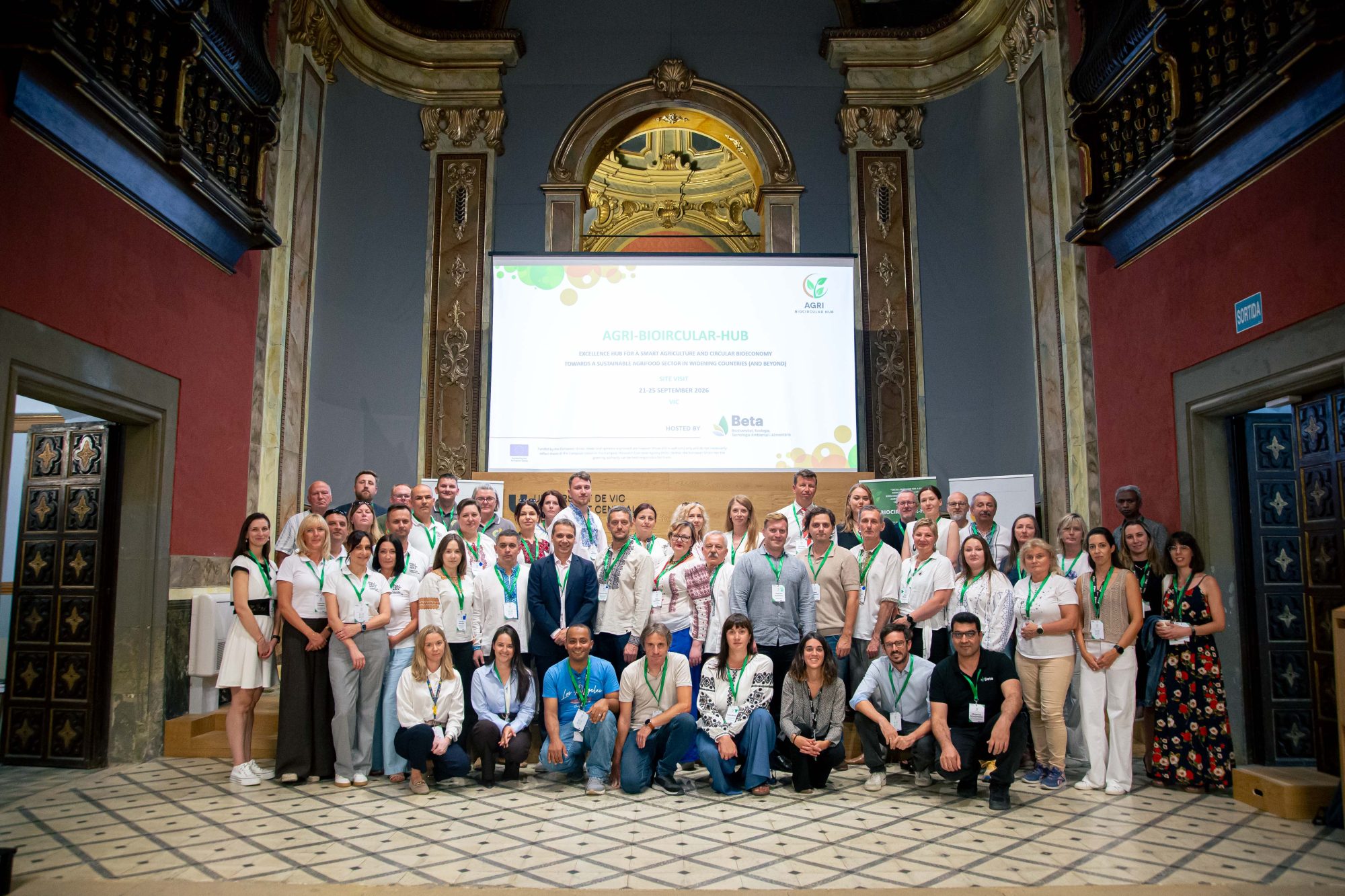
The BETA Technological Centre hosted an international delegation from Ukraine, Poland, and Latvia from September 21 to 25 as part of the European project AGRI-BIOCIRCULAR-HUB. This Horizon Europe – funded initiative aimed to strengthen research and innovation capabilities in circular bioeconomy and sustainable agriculture in Eastern European countries. The project, which includes 21 partners from four countries, is coordinated by Lviv Polytechnic University Ukraine Lviv Polytechnic University of Ukraine and has a budget of almost six million euros for the period 2025-2028.
A benchmark region thanks to its track record in innovation, circular bioeconomy and policy development Public policies focused on sustainability. BETA actively contributes to consolidating this position, promoting innovative solutions with territorial impact and connecting research, public policies and knowledge transfer.
During the visit, on the first day of the event, the Minister of Research and Universities of the Generalitat of Catalonia, Núria Montserrat, met with the Ukrainian delegation participating in the project to strengthen cooperation in research, innovation and circular bioeconomy between Catalonia and Ukraine.
The strategic role of BETA
Within the consortium, BETA plays a key role as the only external advanced partner in the participating countries. Its function extends beyond technical advice: it acts as a bridge between research, public administrations, the private sector, and civil society, contributing over a decade of experience in applied innovation and knowledge transfer to the project.
Their participation allows them to share real-world examples with partners of how the circular bioeconomy can generate tangible impacts in the region. It also contributes to strengthening the regional innovation ecosystems of participating countries, promoting collaboration between public and private stakeholders and facilitating alignment with European research and innovation policies.
A visit to experience innovation firsthand
As one of the project’s highlights, the study visit to Vic and Lleida brought together institutional representatives, researchers, companies, and other stakeholders from the regional innovation ecosystems of Ukraine, Poland, and Latvia. For five days, participants had the opportunity to learn firsthand about experiences, infrastructure, and projects that exemplify the Catalan model of circular bioeconomy.
The aim was to demonstrate how European strategies and policies translate into concrete actions on the ground. Through technical visits, demonstrations, workshops, and networking opportunities, participants learned how collaboration between research centres, government agencies, businesses, and citizens contributes to driving innovation and sustainability in the agri-food sector.
Strengthening European cooperation
Beyond the exchange of knowledge, the meeting sought to consolidate long-term cooperative ties among the participating regions. The creation of stable collaborative networks is essential to accelerate the transition to more sustainable and resilient production models and to generate new opportunities, research, innovation and investment chances.
In the case of Ukraine, this cooperation also has a strategic dimension. The project contributes to strengthening the country’s research and innovation capabilities and fosters its progressive integration into the European Research Area. The participation of key Ukrainian government institutions highlights the role that science, innovation, and international cooperation can play in the processes of reconstruction and approchement with the European Union.
The AGRI-BIOCIRCULAR-HUB represents an opportunity to showcase Catalonia’s experience in circular bioeconomy and sustainable agriculture internationally. The September visit was a tangible example of this, contributing to the development of a European network of territories committed to an innovative and competitive circular bioeconomy aligned with the European Union’s future objectives.