Butterfly extinct in England for a century to be reintroduced using individuals from Catalan populations
The species disappeared from the United Kingdom in 1925, and the first butterflies are expected to be released into the wild in summer 2027.
[addtoany]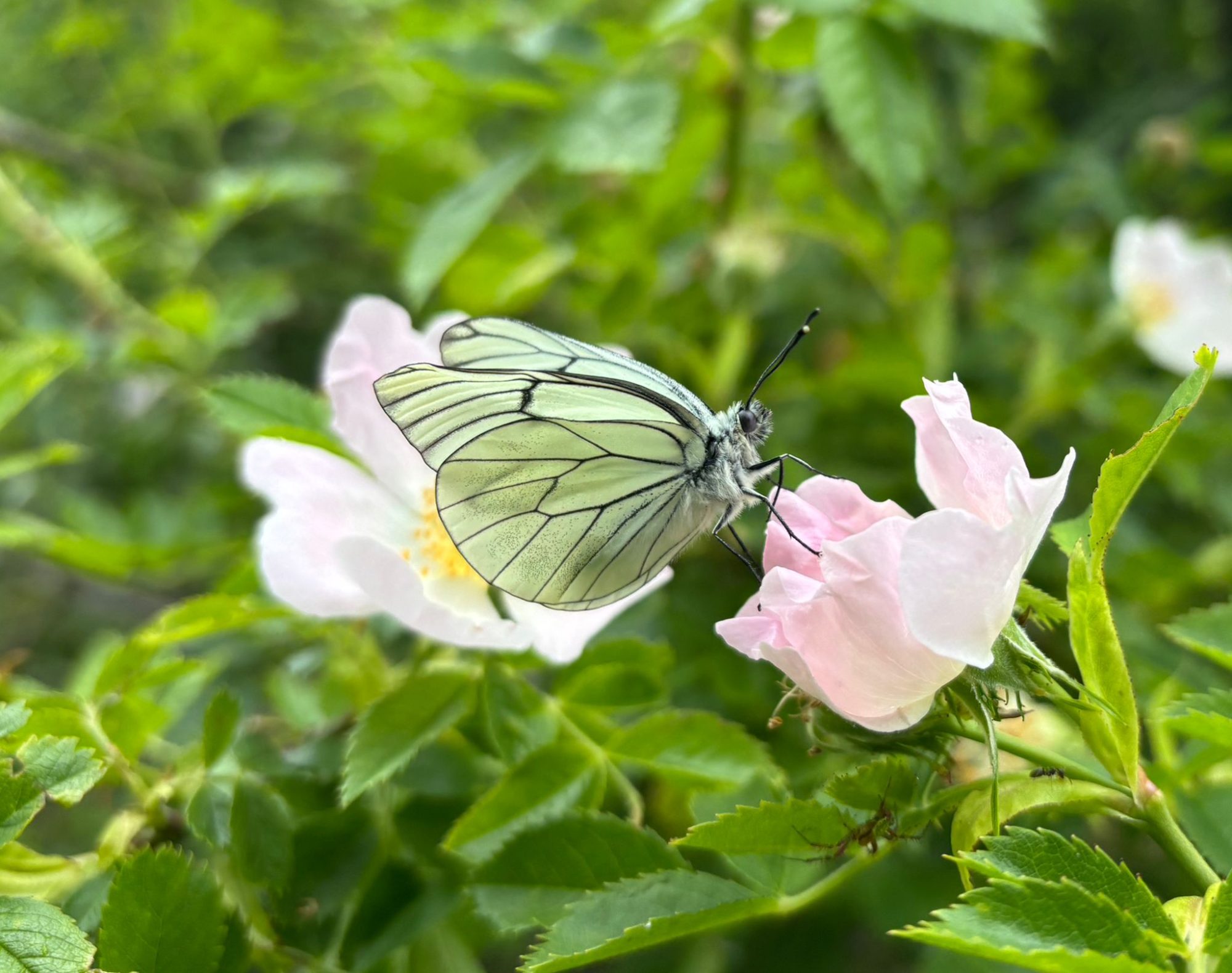
The BiBio Group at the Granollers Museum of Natural Sciences, affiliated with the BETA Technological Centre, has taken part in an international project to reintroduce the Black-veined White butterfly (Aporia crataegi) to southern England, where the species disappeared around a century ago.
The project aims to restore one of Britain’s most iconic butterfly species. Researchers have identified several sites in southern England that currently provide suitable habitat for its re-establishment. At the same time, they surveyed regions across continental Europe with similar climatic conditions to identify the most appropriate donor populations.
The initiative is led by the Knepp Wildland Foundation. Alongside the BiBio Group, project partners include Knepp Estate, home to one of the United Kingdom’s pioneering and most influential rewilding projects, as well as Ambios Ltd, the Zoological Society of London, Butterfly Conservation, Natural England, Royal Holloway, and Dartmoor and Chester Zoos.
The Catalan team’s contribution has focused on identifying the donor populations. Drawing on decades of knowledge about the distribution and conservation status of the species in Catalonia, researchers selected several Pyrenean populations that will provide the butterflies used in the reintroduction programme.
The Black-veined White butterfly
The Black-veined White is closely associated with hawthorn (Crataegus monogyna) and blackthorn (Prunus spinosa), the host plants on which females lay their eggs. It inhabits mainly montane and subalpine grasslands and is found across several mountain ranges in Catalonia.
The reintroduction is being carried out through the transfer of fertilised females from Catalan populations. In England, these females will be kept in captivity to lay eggs under controlled conditions. The caterpillars will develop over the coming months and, if the programme progresses as expected, the first butterflies bred in Sussex will be released into the wild in summer 2027.
The BiBio Group coordinates the Catalan Butterfly Monitoring Scheme (CBMS), Catalonia’s long-term butterfly monitoring programme. Decades of monitoring have provided a detailed understanding of the conservation status of the species across the region. Although the butterfly has declined in some Mediterranean areas, particularly along the Catalan Pre-Coastal Range, it remains abundant and well conserved in the Pyrenees, making these populations an ideal source for the reintroduction programme.
“It is particularly rewarding to see knowledge generated in Catalonia contributing to the recovery of a species that disappeared from the United Kingdom a century ago. This project demonstrates how long-term biodiversity monitoring programmes can have a direct impact on species conservation well beyond our own territory,” says Constantí Stefanescu, researcher at the BiBio Group.