The Granollers Museum of Natural Sciences and the French National Museum of Natural History join forces to monitor bats
With the addition of Vigie-Chiro, the platform will grow from over 1,200 participants to nearly 4,000 and from around 12,000 recording sessions to close to 80,000.
[addtoany]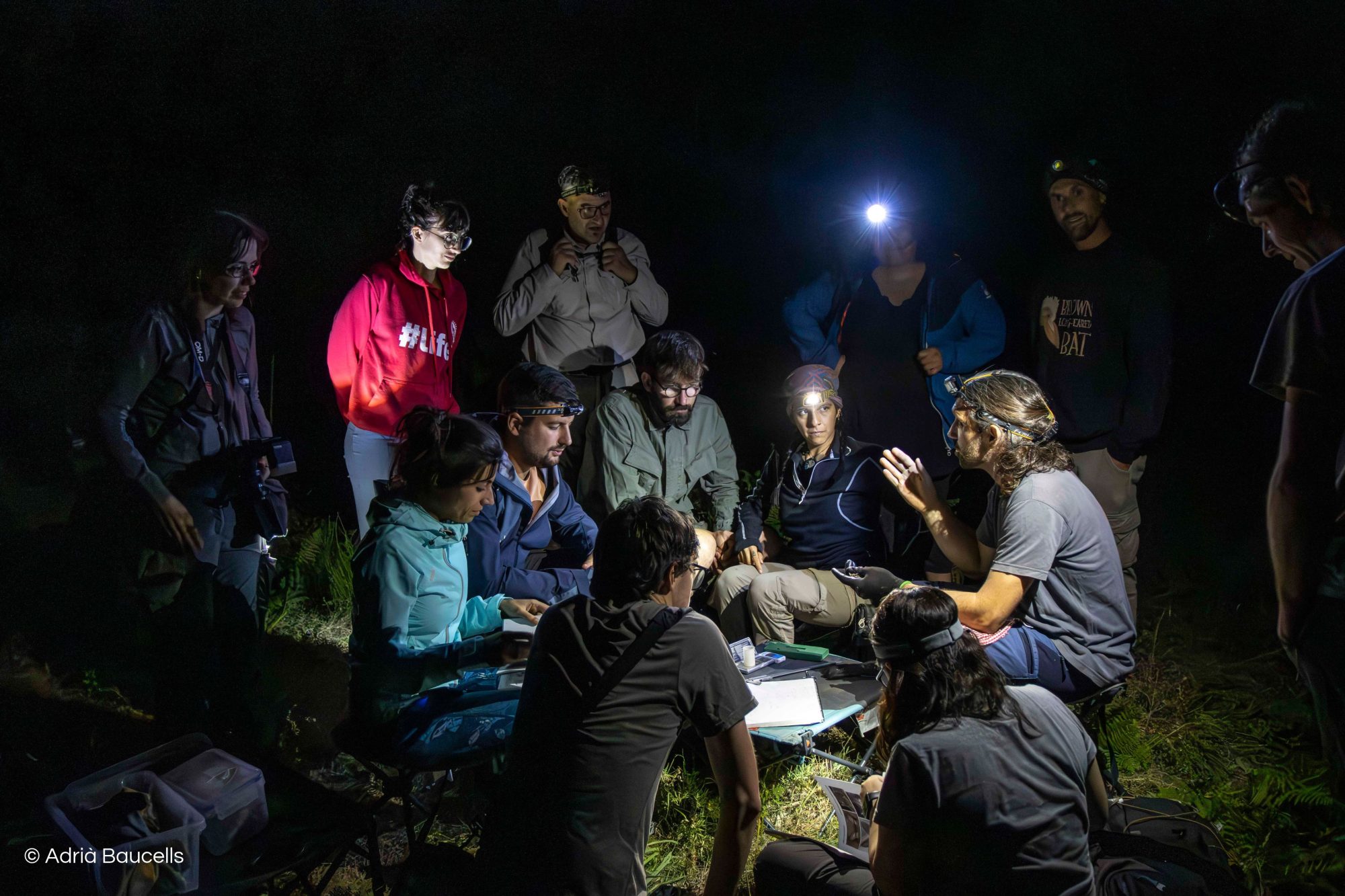
Bats are particularly valuable for studying how changes in the landscape and agricultural and forestry management practices affect ecosystems. They also play an important ecological role by helping regulate insect populations, including some species considered pests. For this reason, all bat species are protected, and monitoring them provides valuable information for assessing the state of ecosystems and informing conservation and land management policies.
A new agreement between the BETA Technological Centre and the French National Museum of Natural History will integrate Vigie-Chiro, one of Europe’s leading acoustic bat monitoring programmes, into batmonitoring.org, a platform developed by the BiBio Research Group. The initiative is a further step towards an interoperable European infrastructure for citizen science. It brings together the Paris museum’s long tradition of scientific research, the BETA Technological Centre’s research capacity, and BiBio’s expertise in technology and wildlife monitoring for applied research and biodiversity conservation.
From citizen science to a European network
The batmonitoring.org platform, the English-language version of ratpenats.org, is a digital infrastructure developed by BiBio to manage, process and analyse large volumes of bat recordings. It supports citizen science projects and includes tools for automated identification, scientific validation, and data management, visualisation and querying.
Integrating the French programme will significantly extend the platform’s reach. It will go from supporting over 1,200 participants to nearly 4,000, and the total number of acoustic recording sessions will rise from around 12,000 to close to 80,000. The platform will handle substantially more data while continuing to combine automated identification with expert review of the results.
“Processing large volumes of acoustic recordings is one of the major challenges facing science today, but it is also one of our best opportunities to put technological advances and artificial intelligence to work for bat and biodiversity conservation, using these tools responsibly and working alongside leading specialists,” says Adrià López-Baucells, a bat specialist with the BiBio research group.
To handle this volume of data, the project is supported by the Spanish Supercomputing Network (RES). An initial six-month development phase and a five-year maintenance plan are envisaged, with technical support and computing capacity from the Consorci de Serveis Universitaris de Catalunya (CSUC) and data storage infrastructure in France.
The aim is to make it easier for more countries and monitoring programmes to join over time, harmonise methods and generate comparable data to better understand how bat populations are changing across Europe.
Two museums, four centuries of scientific history and shared challenges
The partnership connects the long natural history tradition of the Muséum national d’Histoire naturelle in Paris, a world-leading institution with almost four centuries of history, with the Granollers Museum of Natural Sciences (MCNG), which was founded in 1982 and played a central role in the development of BiBio. It brings the history of European natural sciences together with new monitoring methods and digital infrastructure for biodiversity research, showing how research and technology developed by local institutions can contribute to major international initiatives.
“For an institution of the stature of the Paris Natural History Museum to choose our technology shows the maturity and value of the research we’ve been building in Granollers for more than twenty years,” says Carles Flaquer, BiBio coordinator. “This agreement shows the remarkable international potential of the citizen science and wildlife monitoring model that began at the Granollers Museum of Natural Sciences, and why we should continue to invest in it,” he adds.
A new stage for BiBio
Integrating the BiBio Research Group into the BETA Technological Centre, affiliated with the University of Vic – Central University of Catalonia, strengthens the team and ensures the continuity of research that began more than twenty years ago at the Granollers Museum of Natural Sciences. BETA’s facilities give the group greater capacity to develop its biodiversity monitoring tools and expand its international cooperation.
The Granollers Museum of Natural Sciences is the scientific base from which BiBio developed the platform and its citizen science model for biodiversity monitoring. Keeping the museum as the group’s scientific base is a priority as the work carried out in Granollers takes on a European dimension through initiatives such as the integration of France’s Vigie-Chiro programme.
