The BETA TC places UVic-UCC among the leading entities in the State in European research in bioeconomy and the environment
This is stated in the provisional report on Spanish participation in the Horizon Europe 2021-2024 programme
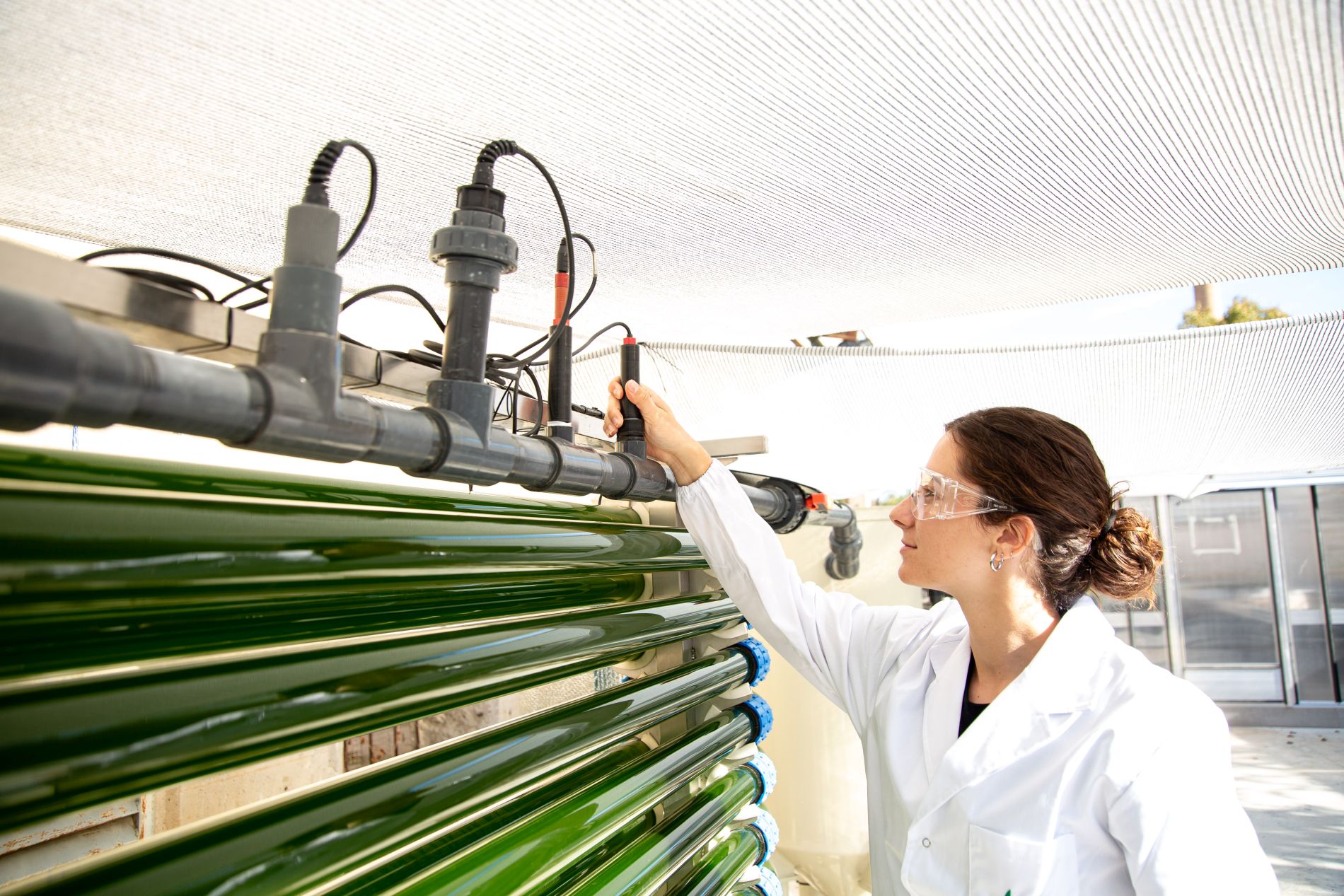
The BETA Technology Centre of the University of Vic – Central University of Catalonia (UVic-UCC) is positioned as one of the main drivers of European funding in the bioeconomy and environment in Spain, helping to place UVic-UCC among the leading entities in this field. In the period 2021-2024, the centre has raised more than 11.5 million euros in projects from the Horizon Europe programme.
This is stated in the provisional report on Spanish participation in the Horizon Europe 2021-2024 programme, published by the Centre for Technological Development and Innovation (CDTI). During this period, UVic-UCC has participated in a total of 25 projects funded under Horizon Europe, which places it as the 20th university in Spain and the 5th in Catalonia with the most funding from this European programme.
Of the 25 UVic-UCC projects funded by Horizon Europe, 21 have been promoted or have the participation of CT BETA, 6 of them as a coordinating entity, which demonstrates the central role of the center in the University’s European activity. Within Horizon Europe, the center stands out especially in the area of Cluster 6 of the program, focused on areas such as food, bioeconomy, natural resources and the environment, which addresses global challenges such as climate change, the sustainability of agri-food systems or water management.
In this specific area, the contribution of CT BETA allows UVic-UCC to be part of a small group of leading entities in the Spanish State, together with institutions such as the Spanish National Council for Scientific Research (CSIC) or the Spanish State Research Agency (AEI). It is also located next to universities such as Santiago de Compostela or Vigo, and leading technology centers such as AZTI, one of the main research and innovation centers in the Basque Country, or Leitat, one of the largest technology centers in Catalonia.
“We are competing with large research centers with a very consolidated history and a high capacity to raise funds. The fact of being part of this group shows that BETA has been able to position itself and compete at the same level in the European context,” says Sergio Ponsá, director of the CT BETA.
Research connected to the territory and European positioning
The growth of CT BETA in recent years is explained by its ability to identify real needs of the territory and the productive sector, and to transform them into research and innovation projects with impact. This orientation has allowed the center to specialize in key areas such as the circular bioeconomy, the sustainability of agri-food systems or the efficient management of resources.
As Ponsá points out, “one of the keys to CT BETA is that projects are not designed from an office, but with companies, administrations and local actors involved from the start. This means that the solutions we develop are applicable and have a real impact”.
At the same time, CT BETA has consolidated a prominent position at the European level through active participation in networks, platforms and international consortia. Currently, the centre is part of 17 networks, clusters and associations in Catalonia and Spain, and 25 in Europe, which has allowed it to establish alliances with a large number of partners from all over Europe. This collaboration network has been key to accessing competitive projects and to placing the centre in the main spaces for defining priorities in the field of sustainability.
In this context, the technology centre participates in and coordinates European projects in consortia with companies, administrations and research centres. Of particular note are the FlagShip initiatives of the Circular Bio-based Europe Joint Undertaking (CBE JU), aimed at deploying innovative industrial solutions. The centre is the only entity in Spain present in three of these projects, aimed at building and validating new bioeconomy value chains on a real scale.
This set of activities translates into the development of pilot and demonstration plants, new technologies for valorising by-products and tools to improve the efficiency of the use of resources such as water or nutrients, with direct application in the agri-food and industrial sectors.
A work with its feet on the ground
In the CDTI report, the results are formally attributed to the Balmes University Foundation, the legal entity of UVic-UCC. However, a very significant part of this funding is the result of the scientific and recruitment activity of the CT BETA, which acts as the main driver of the university’s European participation.
This positioning has been built on a way of working that is closely linked to the territory, but with a clear European vocation. The CT BETA promotes projects in which companies, public administrations and other key actors in the agri-food and environmental sectors actively participate, which contribute to placing Catalonia and its productive sectors in the main European research and innovation spaces. In this sense, European projects not only generate impact within the centre, but also channel funding, knowledge and opportunities towards the ecosystem, while encouraging the participation of companies and institutions in international consortia.
Beyond Horizon Europe, CT BETA also actively participates in other European programs such as “LIFE”, “PRIMA” or Interreg programs, with a total of more than 5.3 million additional euros raised in these instruments during the same period 2021-2024.
The center has consolidated a high capacity to raise competitive funding and a prominent role in the coordination of international projects. During this period, it has maintained a coordination ratio of approximately one in three European projects, a particularly high percentage compared to other entities and research centers.
“Being part of this group of leading entities reinforces the commitment to useful research, connected to real challenges and with a European vocation”, points out Sergio Ponsá. This recognition reinforces the role of CT BETA as a driving agent within the Catalan ecosystem, capable of connecting the territory with European opportunities.